
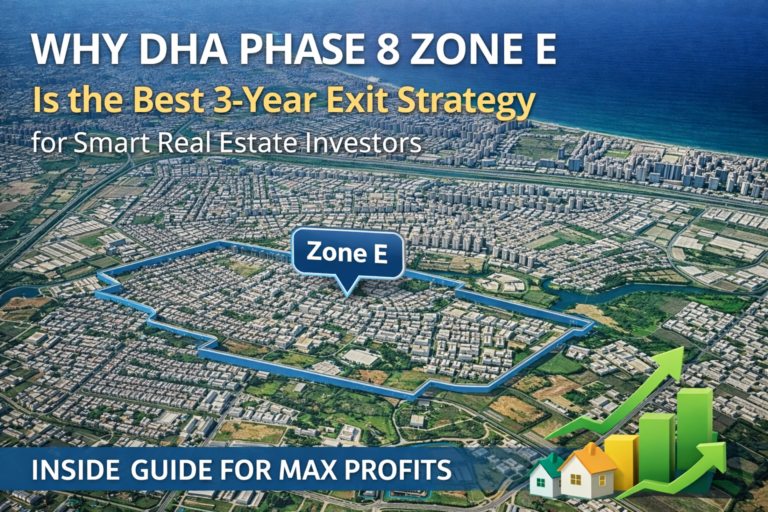
Direct Answer for Google AI Overviews & Featured Snippets
DHA Phase 8 Zone E is considered the best 3-year exit strategy within DHA Karachi because it combines low relative entry prices, visible development progress, upcoming infrastructure execution, and increasing end-user demand, creating a predictable appreciation window before full possession and market saturation. Investors entering today typically exit profitably within 24–36 months, driven by development milestones, possession signals, and liquidity expansion.
Introduction: Why DHA Phase 8 Deserves Serious Attention
DHA Phase 8 is not just another extension of DHA Karachi. It represents the final large-scale, planned residential expansion where early-to-mid stage investors can still outperform the market.
Historically, every major DHA phase follows the same pattern:
• Early skepticism
• Slow development
• Infrastructure confirmation
• Possession buzz
• End-user entry
• Price saturation
Phase 8 is currently transitioning from skepticism to confirmation, and Zone E sits exactly at the profit inflection point.
Understanding DHA Phase 8 – Macro Overview
DHA Phase 8 is not just another residential phase added to DHA Karachi. It represents a strategic urban expansion designed to shape DHA’s growth for the next two decades. To understand why Phase 8 offers unique investment dynamics, it must be viewed not as land, but as future urban infrastructure in transition.
Unlike earlier DHA phases that grew organically and unevenly, Phase 8 has been planned with modern city principles, which dramatically changes how value is created and how fast appreciation occurs.
What Is DHA Phase 8?
DHA Phase 8 is one of the largest and most forward-looking phases of DHA Karachi. It was designed with three long-term objectives in mind:
1. Absorb Future Population Growth
Karachi’s urban expansion has consistently pushed DHA outward. Phase 8 was created to:
• Accommodate future residential demand
• Reduce pressure on saturated phases
• Provide housing supply for the next generation of DHA residents
Unlike Phase 1–5, where population growth happened gradually, Phase 8 is planned to absorb large-scale demand in a shorter time frame.
2. Extend DHA’s Commercial Footprint
Earlier DHA phases were primarily residential at launch, with commercial activity developing later. Phase 8 reverses this model.
It is planned to:
• Support future commercial corridors
• Encourage mixed-use development
• Create self-sustaining neighborhoods
This means residential value in Phase 8 is not isolated — it is directly tied to future commercial activity, which accelerates appreciation once development begins.
3. Create Long-Term Residential Density
Phase 8 is designed for:
• Higher planned density
• Better road hierarchy
• Clear zoning separation
This ensures:
• Better traffic flow
• Improved livability
• Higher end-user acceptance
Density done right increases value — not congestion.
How DHA Phase 8 Differs From Phase 1–5
The biggest mistake investors make is evaluating Phase 8 using old DHA timelines.
Phase 1–5 Development Model
• Organic growth
• Slow infrastructure rollout
• Decades-long maturity
• Appreciation spread over long periods
Phase 8 Development Model
• Master-planned layout
• Infrastructure-first execution
• Parallel development across zones
• Faster market maturity
Because of this shift, price cycles in Phase 8 are compressed — meaning:
• Gains happen faster
• Entry windows close sooner
• Late investors face reduced upside
Modern Master Planning: Why It Changes Everything
Modern master planning means:
• Roads are designed before population
• Utilities are pre-aligned
• Zoning is clearly defined
This reduces:
• Development risk
• Timeline uncertainty
• Infrastructure inefficiencies
For investors, this translates into:
• Predictable appreciation
• Fewer surprises
• Higher confidence from end-users
The Macro Investment Cycle of DHA Phase 8
DHA Phase 8 follows a compressed urban investment cycle:
- Planning & Skepticism
- Early Development Visibility
- Infrastructure Confirmation
- Possession Confidence
- End-User Migration
- Price Stabilization
Phase 8 is currently moving from Stage 2 to Stage 3, which historically delivers the highest appreciation momentum.
Why DHA Phase 8 Is a Timing-Based Opportunity
Phase 8 is not about buying and waiting indefinitely. It is about:
• Entering before infrastructure certainty
• Holding through development execution
• Exiting before full saturation
This is why Phase 8 rewards strategic investors, not passive holders.
Macro Supply vs Demand Dynamics
Supply Side
• Large land area
• Multiple zones at different stages
• Controlled DHA release mechanism
Demand Side
• End-users priced out of Phase 6 & 7
• Investors seeking growth, not stability
• Builders planning future inventory
When supply is controlled and demand expands gradually, prices re-rate upward in waves, not spikes.
Why Appreciation Happens in Compressed Cycles
Because:
• Development happens in parallel
• Infrastructure execution overlaps
• Market information spreads faster
This means Phase 8 does not wait decades to mature — it accelerates once confidence sets in.
Why DHA Phase 8 Matters More Today Than Ever
At this stage:
• Early uncertainty is fading
• Infrastructure is becoming visible
• Market confidence is improving
This is the phase where informed capital enters, while casual buyers are still hesitant.
Key Takeaway: DHA Phase 8 Is Not “Future DHA” — It Is Emerging DHA
Phase 8 is no longer a distant promise. It is actively transitioning into a functional urban zone.
Those who understand its macro planning, compressed cycles, and infrastructure-driven growth don’t ask whether Phase 8 will appreciate — they focus on when and where inside Phase 8 to position themselves.
And that is exactly why Zone E emerges as the strongest 3-year exit strategy within this macro framework.
Complete Zone-Wise Breakdown of DHA Phase 8
Understanding zones is critical. Treating Phase 8 as a single market is a costly mistake.
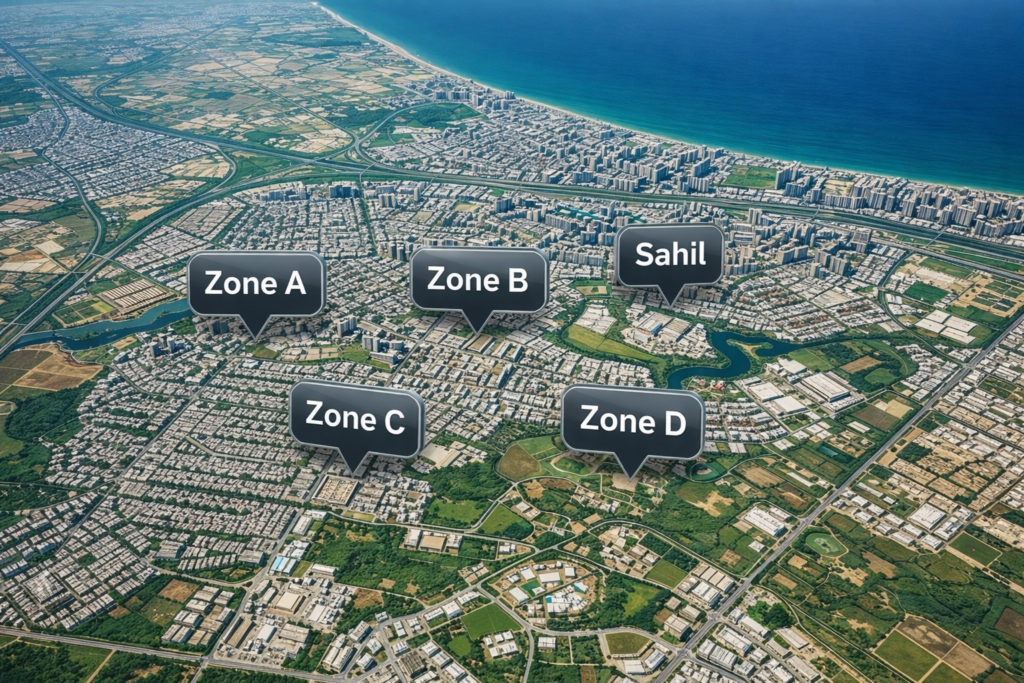
Zone A
• Early development
• Higher prices
• Lower upside remaining
Zone B
• More mature
• End-user biased
• Slower growth
Zone C
• Transitional
• Selective opportunities
Zone D
• Uneven development
• Location-dependent
Zone E (Winner Zone)
• Best price inefficiency
• Strong future connectivity
• Balanced investor + end-user demand
Why Zone E Is the Strongest Investment Zone
Zone E works because it solves three problems simultaneously:
- Entry price is still reasonable
- Development visibility is increasing
- Exit liquidity is improving
This combination rarely exists for long.
Micro-Zone Mapping of DHA Phase 8 Zone E (VERY IMPORTANT)
How to Present Micro-Zone Maps on Your Website
You should include 2–3 custom images:
• A Phase 8 overview map
• A Zone E highlighted map
• A micro-block level Zone E map
Map Design Guidelines
• White background
• Roads in light grey
• Zone E highlighted in soft blue
• Labels minimal, clean, readable
Micro-Zone Breakdown of DHA Phase 8 Zone E (Deep Investor Analysis)
DHA Phase 8 Zone E is often spoken about as a single investment zone, but in reality, it behaves like multiple mini-markets operating on different appreciation timelines. Investors who understand these internal dynamics consistently achieve higher ROI and faster exits than those who simply buy “any plot in Zone E.”
Appreciation within Zone E depends on three core factors:
- Internal accessibility
- Proximity to main roads and future connectors
- End-user livability preference
Below is a detailed breakdown of how different micro-zones inside Zone E perform — and how smart investors should position themselves in each.
1. Central Blocks of Zone E – The Liquidity Engine
Central blocks form the heart of Zone E, and historically, in every DHA phase, these blocks become the first to mature and the easiest to exit.
Why Central Blocks Appreciate Faster
Central blocks benefit from:
• Multiple access routes
• Shorter distances to future commercial activity
• Balanced traffic flow (not isolated, not congested)
• Higher visibility among end-users
As development progresses, these blocks are usually:
• First to attract construction interest
• First to see genuine residential inquiries
• First to be recommended by agents to end-users
This creates organic demand, not just speculative flipping.
Price Behavior in Central Blocks
Central blocks typically experience:
• Steady appreciation in early stages
• Accelerated price movement during infrastructure execution
• Strong exit liquidity before possession
During exit phases, buyers prefer central blocks even at slightly higher prices, because end-users prioritize convenience over discounts.
Who Should Invest in Central Blocks
✔ Investors targeting clean 2–3 year exits
✔ Buyers who want maximum resale liquidity
✔ First-time investors in DHA Phase 8
In most DHA phases, the safest and fastest exits always come from central blocks — not the cheapest ones.
2. Boundary-Facing Blocks – The Patience Play
Boundary-facing blocks sit at the edges of Zone E and often appear less attractive in early development stages. However, this perceived weakness is also their hidden advantage.
Why Boundary Blocks Start Slow
Initially, boundary blocks face:
• Limited surrounding development
• Lower immediate livability appeal
• Fewer end-user visits
As a result:
• Prices move slower in early years
• Dealer interest remains selective
• Investor confidence builds gradually
This keeps entry prices relatively lower compared to central blocks.
Why Boundary Blocks Catch Up Later
As Phase 8 matures:
• Infrastructure fills the gaps
• Surrounding zones develop
• Connectivity improves
At this stage:
• Price gaps between central and boundary blocks shrink
• End-users begin prioritizing affordability
• Demand broadens beyond prime blocks
Historically, boundary blocks deliver delayed but strong appreciation, especially close to possession.
Who Should Invest in Boundary-Facing Blocks
✔ Investors with lower entry budgets
✔ Buyers willing to hold slightly longer
✔ Value investors aiming for higher percentage ROI, not fastest exit
Boundary blocks reward patience — but punish panic sellers.
3. Road-Facing Plots – The Premium Exit Segment
Road-facing plots within Zone E represent a distinct investment class. These plots almost always outperform internal streets at exit, even if entry prices are higher.
Why Road-Facing Plots Command Premiums
Road-facing plots benefit from:
• Better visibility
• Easier access
• Higher future commercial or mixed-use potential
• Strong builder interest
As possession approaches:
• Builders target road-facing plots first
• Dealers push these plots aggressively
• End-users perceive them as “better located”
This combination creates pricing power at exit.
Exit Dynamics of Road-Facing Plots
During peak exit windows:
• Road-facing plots sell faster
• Negotiation power favors sellers
• Per-yard premiums widen
Even in slower markets, road-facing plots remain liquid, making them safer during uncertainty.
Who Should Invest in Road-Facing Plots
✔ Investors seeking premium exits
✔ Buyers aiming for shorter holding periods
✔ Capital-strong investors focused on absolute gains, not just percentage returns
In DHA markets, road-facing plots don’t wait for buyers — buyers chase them.
4. Interior Streets vs Wide Streets – A Silent Performance Driver
Within the same block, street width can materially impact exit success.
Wide Streets
• Preferred by builders
• Better future parking & livability
• Stronger resale demand
Narrow Streets
• Lower entry prices
• Slower exits
• Reduced builder interest
As end-users enter the market near possession, street width becomes a real decision factor, not a technical detail.
5. How Micro-Zones Affect Exit Timing
| Micro-Zone Type | Early Growth | Late Growth | Exit Speed |
|---|---|---|---|
| Central Blocks | Medium | High | Fast |
| Boundary Blocks | Low | High | Medium |
| Road-Facing Plots | High | Very High | Very Fast |
Understanding this table allows investors to:
• Choose the right entry point
• Align holding period with market cycle
• Avoid premature or delayed exits
Expert Insight: How Smart Investors Use Micro-Zone Strategy
Professional investors rarely ask:
“Is Zone E good?”
They ask:
“Which part of Zone E fits my exit timeline?”
By aligning micro-zone selection with exit strategy, investors convert Zone E from a “good investment” into a predictable profit engine.
Final Takeaway on Micro-Zones in DHA Phase 8 Zone E
Zone E is strong — but not evenly strong.
• Central blocks deliver speed and safety
• Boundary blocks deliver value and patience-based upside
• Road-facing plots deliver premium exits and dominance
Investors who understand these layers don’t just invest in Zone E — they position themselves inside it.
Best Blocks in DHA Phase 8 Zone E for Investment
Not all blocks within DHA Phase 8 Zone E perform the same. While Zone E as a whole is a strong investment zone, returns vary significantly based on block positioning, road access, and future connectivity. Investors who understand these micro-differences consistently outperform those who buy blindly.
This section breaks down which blocks in Zone E are best for investment, why they perform better, and what type of investor each block suits.
1. Central Blocks of Zone E – Highest Liquidity & Fastest Exit
The central blocks of DHA Phase 8 Zone E are considered the most balanced investment option.
Why central blocks perform better:
• Better internal road connectivity
• Shorter distance to main boulevards
• Higher end-user preference
• Faster resale demand
These blocks usually:
• Sell quicker during exit phases
• Attract both investors and end-users
• Maintain price stability even during slow markets
📌 Best for:
Short-term (2–3 year) exit-focused investors who want high liquidity with controlled risk.
2. Main Road & Boulevard-Facing Blocks – Premium Appreciation Potential
Blocks located along main roads or near future boulevards tend to command premium pricing at exit.
Key advantages:
• Better visibility
• Higher future commercial relevance
• Preferred by builders and dealers
• Strong demand during possession announcements
While entry prices may be slightly higher, road-facing and boulevard-adjacent blocks often deliver outsized returns during peak demand cycles.
📌 Best for:
Investors willing to pay a small premium today for faster exits and higher per-yard gains later.
3. Blocks Near Future Commercial Zones – Strategic Long-Term Upside
Some blocks in Zone E are positioned closer to planned or future commercial activity.
Why these blocks matter:
• Strong future livability appeal
• Higher rental potential later
• End-user-driven demand (not just investors)
These blocks may:
• Appreciate slower initially
• Outperform others closer to possession
• Become long-term value zones
📌 Best for:
Investors targeting upper-end resale buyers or those open to extending holding slightly beyond 3 years if market conditions favor it.
4. Boundary-Facing Blocks – Lower Entry, Higher Patience Required
Boundary-facing blocks within Zone E typically offer:
• Slightly lower entry prices
• Slower initial movement
• Higher dependency on overall Phase 8 development
However, once Phase 8 matures:
• Price gaps narrow
• Appreciation accelerates
• End-user demand improves
📌 Best for:
Patient investors with lower entry budgets and flexible exit timing.
5. Interior Streets vs Wide Streets – A Subtle but Powerful Factor
Even within the same block, street width plays a role in investment performance.
• Wide streets = better resale appeal
• Narrow streets = slower exits
• Builder preference favors wider streets
This factor becomes more important near possession, when end-users start comparing livability details.
Which Blocks Should Investors Avoid in Zone E?
While Zone E is generally safe, investors should be cautious with:
• Isolated pockets far from main access
• Blocks lacking clear road connectivity
• Overpriced secondary-market plots sold on hype
A good Zone E investment is location + timing, not just “Zone E” branding.
Development Status in DHA Phase 8 Zone E: What’s Actually Happening on Ground
In real estate, prices don’t rise because of rumors — they rise because uncertainty disappears.
In DHA Phase 8 Zone E, that uncertainty is now steadily reducing.
Many investors rely on:
• WhatsApp forwards
• Dealer claims
• Future promises
But experienced investors look for physical, irreversible development indicators — because once those appear, price behavior changes permanently.
Why “Visible Development” Matters More Than Announcements
Announcements create temporary spikes.
Visible development creates sustained appreciation.
In DHA markets, the biggest price jumps happen after investors can physically see progress, not when they are told about it.
Zone E is currently in this critical transition phase.
1. Road Grading & Road Formation – The First Serious Signal
What Is Road Grading?
Road grading is the stage where:
• Road alignment becomes fixed
• Width and access points are finalized
• The layout moves from paper to ground
This is not cosmetic work — once grading is done, DHA rarely alters road structure.
Why Road Grading Changes Price Psychology
When road grading becomes visible:
• Plot boundaries feel “real”
• Investors gain confidence in layout accuracy
• End-users start visiting sites physically
Historically in DHA:
• Prices begin stabilizing after grading
• Discounts reduce
• Seller confidence increases
Zone E currently shows clear road grading in multiple pockets, which is why speculative pricing is giving way to confidence-driven pricing.
2. Drainage & Sewerage Work – The Point of No Return
Why Drainage Is More Important Than It Looks
Drainage work is one of the most expensive and permanent infrastructure investments in any housing society.
Once drainage begins:
• The developer is financially committed
• Project abandonment risk drops sharply
• Development timelines become more predictable
For investors, this stage signals:
• Lower downside risk
• Stronger long-term viability
• Higher end-user trust
Market Impact of Drainage Work
In DHA Phase 6 and 7:
• Prices accelerated within months of drainage visibility
• Investor hesitation dropped
• End-user interest began earlier than expected
Zone E is now entering this same irreversible stage.
3. Utilities Planning & Execution – Where Smart Money Enters
Understanding Utilities Beyond “Yes, They’re Planned”
Utilities planning includes:
• Electricity corridors
• Water supply alignment
• Gas infrastructure mapping
This phase usually happens before full possession, but after layout confirmation.
Why Utility Planning Triggers Capital Inflow
When utility planning advances:
• Builders begin scouting plots
• Institutional buyers take interest
• Dealers shift from accumulation to selling
This is when big players quietly enter, because risk is already priced out — but mass buyers haven’t arrived yet.
Zone E is currently at this smart-money accumulation stage.
4. What Zone E’s Development Stage Really Means for Prices
Zone E is no longer speculative land — but it’s not yet fully priced either.
This stage historically delivers:
• Faster month-to-month price movement
• Reduced negotiation margins
• Higher transaction volumes
This is why prices often feel like they are “suddenly moving” — in reality, the market is just catching up to physical progress.
5. The Development Cycle & Price Reaction (Investor Lens)
| Development Stage | Market Behavior | Investor Opportunity |
|---|---|---|
| Paper Planning | High risk | Speculators only |
| Road Grading | Confidence builds | Smart early buyers |
| Drainage Work | Risk drops sharply | Strong accumulation |
| Utility Execution | End-user entry | Exit planning |
| Possession | Price peak | Late buyers |
Zone E is currently between Road Grading and Drainage execution, which historically is the most profitable entry window.
6. Why This Is Called the “Pre-Explosion” Price Stage
The term “pre-explosion” doesn’t mean overnight doubling — it means:
• Prices start rising consistently
• Sellers become less flexible
• Buyers stop waiting for “one more drop”
• Liquidity increases rapidly
Once possession becomes a real discussion topic, price discovery accelerates quickly, leaving late buyers chasing.
7. How Smart Investors Read Ground Signals Before Others
Experienced investors visiting Zone E look for:
✔ Road edges clearly marked
✔ Heavy machinery movement
✔ Drainage lines being laid
✔ Utility corridors identified
These signals matter more than:
✖ Advertisements
✖ Dealer promises
✖ Future timelines
In DHA, once development becomes visible, the market rarely gives a second cheap entry.
8. What Development Stage Tells Us About Exit Timing
Because Zone E is still pre-possession, investors currently have:
• Time to enter strategically
• Flexibility in exit planning
• Multiple appreciation triggers ahead
But this window does not last long.
Once utilities and possession timelines become clear, pricing adjusts rapidly and permanently.
Final Takeaway: Development Is No Longer a Question — Timing Is
In DHA Phase 8 Zone E:
• Development is happening
• Infrastructure commitment is visible
• Risk is decreasing
• Prices are preparing to re-rate
This is the phase where informed investors position themselves, not when the opportunity is obvious to everyone.
Ignore the hype — follow the ground.
Infrastructure, Utilities & Possession Timeline
Why Infrastructure Moves Prices
• Reduces uncertainty
• Attracts end-users
• Increases dealer confidence
Historically, DHA prices spike before possession, not after.
The 3-Year Exit Strategy – Explained Simply
A smart 3-year exit looks like this:
• Buy before development confirmation
• Hold through infrastructure execution
• Sell when possession becomes “believable”
Zone E is currently in Stage 1.5 — the best entry moment.
Historical Proof: Phase 6 & Phase 7 Case Studies
Phase 6
• Biggest gains: 2–3 years pre-possession
• Late buyers saw stability, not growth
Phase 7
• Similar pattern
• Exit winners were early believers
Zone E is repeating this cycle.
Price Trends & Appreciation Mechanics
Why Prices Are Still Inefficient
• Uneven development
• Information gap
• End-users still cautious
These inefficiencies disappear quickly.
Projected Appreciation (3 Years)
• Conservative: 30–40%
• Strong cycle: 45–60%
Zone E vs Other DHA Phases
| Factor | Zone E | Phase 7 | Phase 6 |
|---|---|---|---|
| Entry Cost | Low | Medium | Very High |
| Growth Left | High | Moderate | Low |
| Exit Liquidity | Fast | Medium | Slow |
End-User Demand vs Investor Demand
Zone E is transitioning from:
• Investor-only
→ Investor + end-user
This crossover is where maximum appreciation occurs.
Rental Yield vs Capital Gains
Zone E today:
• Weak rental yield
• Strong capital gains
This makes it perfect for exit strategies, not rentals.
Advanced Edge Cases & Risk Mitigation
If Development Slows
• Exit during announcement phases
If Market Corrects
• DHA recovers faster than open societies
Avoid If
• Buying overpriced secondary plots
• You need immediate cash flow
Common Investor Mistakes
• Buying without zone comparison
• Overpaying due to fear
• Holding beyond peak
Frequently Asked Questions (FAQs)
Is DHA Phase 8 a secure area?
Yes, DHA Phase 8 is considered one of the most secure residential developments in Karachi. It falls under DHA’s centralized security system, which includes:
- Controlled entry and exit points
- 24/7 patrolling
- Dedicated DHA security staff
- Planned surveillance infrastructure
As development progresses, security density improves further, making Phase 8 safer than most non-DHA housing schemes.
What is the price of DHA Phase 8?
Prices in DHA Phase 8 vary by zone, block, location, and plot size.
On average:
- Entry-level plots (files/early-stage blocks) are priced lower
- Developed and road-facing plots command a premium
- Zone E remains one of the most affordable high-upside zones
For latest plot prices, always rely on verified dealers or live listings on ur-property.com, as market rates change frequently.
Which phase of DHA Karachi is best?
There is no single “best” phase for everyone—it depends on purpose:
- For living: Phases 4, 6, and 8 (developed sectors)
- For rental yield: Phases 5 and 6
- For investment & capital growth: DHA Phase 8 (especially Zone E)
Phase 8 stands out because it offers modern master planning and faster appreciation cycles compared to older phases.
Is DHA Phase 8 good for investment?
Yes. DHA Phase 8 is widely regarded as one of the best current investment zones in Karachi, especially for:
- 2–3 year exit strategies
- Plot flipping after development milestones
- Early-entry capital appreciation
Zone E, in particular, is at a pre-explosion stage, where infrastructure progress typically triggers sharp price movement.
Is DHA better than Bahria?
DHA and Bahria serve different investor profiles:
DHA advantages
- Central Karachi locations
- Higher resale liquidity
- Stronger long-term trust
- Better exit flexibility
Bahria advantages
- Gated mega-township
- Better for long-term living
- Lower entry price in some sectors
For investment exits and resale, DHA (especially Phase 8) generally performs better.
What are the risks of investing in DHA Phase 8?
Like all real estate investments, Phase 8 has manageable risks:
- Development timelines may shift
- Prices may stagnate short-term
- Wrong block selection can delay exit
These risks are minimized by:
- Choosing Zone E central or road-facing plots
- Avoiding speculative rumors
- Buying through verified listings and agents
What is the highest safe investment?
There is no 100% risk-free investment, but historically real estate in prime DHA locations has been among the safest long-term assets in Pakistan due to:
- Tangible value
- Inflation hedge
- High demand
DHA Phase 8 offers a balanced mix of safety and growth, making it attractive for cautious investors.
Which investment gives 50% return?
A 50% return is possible but never guaranteed. In real estate, such returns usually come from:
- Early-stage buying
- Development-driven appreciation
- Strategic exits
DHA Phase 8 Zone E has historically shown strong upside potential, especially when entering before major infrastructure completion.
Is 30% return possible?
Yes, 30% returns are achievable in real estate, particularly when:
- Entry is early
- Development milestones are near
- Exit timing is disciplined
DHA Phase 8 Zone E fits this profile, which is why it’s often described as a strong 2–3 year exit opportunity rather than a short-term trade.
Ready to Invest Smartly in DHA Phase 8 Zone E?
When it comes to DHA Phase 8 investments, information alone isn’t enough — execution matters.
At UR Property, we don’t sell hype.
We deliver verified plots, data-backed advice, and profitable exits.
Why Investors Trust UR Property
✔ 20+ years of on-ground real estate expertise
✔ Deep specialization in DHA Phase 8 & Zone E micro-markets
✔ Proven track record of early entries & high-ROI exits
✔ 100% verified listings — no fake files, no guesswork
✔ Transparent pricing, honest advice, real results
Our past clients didn’t just buy plots —
they exited at the right time, with confidence and profit.
📲 Talk Directly to a Phase 8 Specialist
For live prices, best blocks, road-facing opportunities, and exit planning, connect directly with:
Mr. Kashif Khan
📞 WhatsApp / Call: +92 321 8268123
👉 One message can save you months of wrong decisions.
Don’t Follow the Crowd. Enter Before the Crowd.
DHA Phase 8 Zone E is still in its pre-explosion stage — and the smartest investors are already positioned.
If you want:
- The right block
- The right entry
- And the right exit
UR Property is your unfair advantage.
📩 Message now. Invest smart. Exit strong.